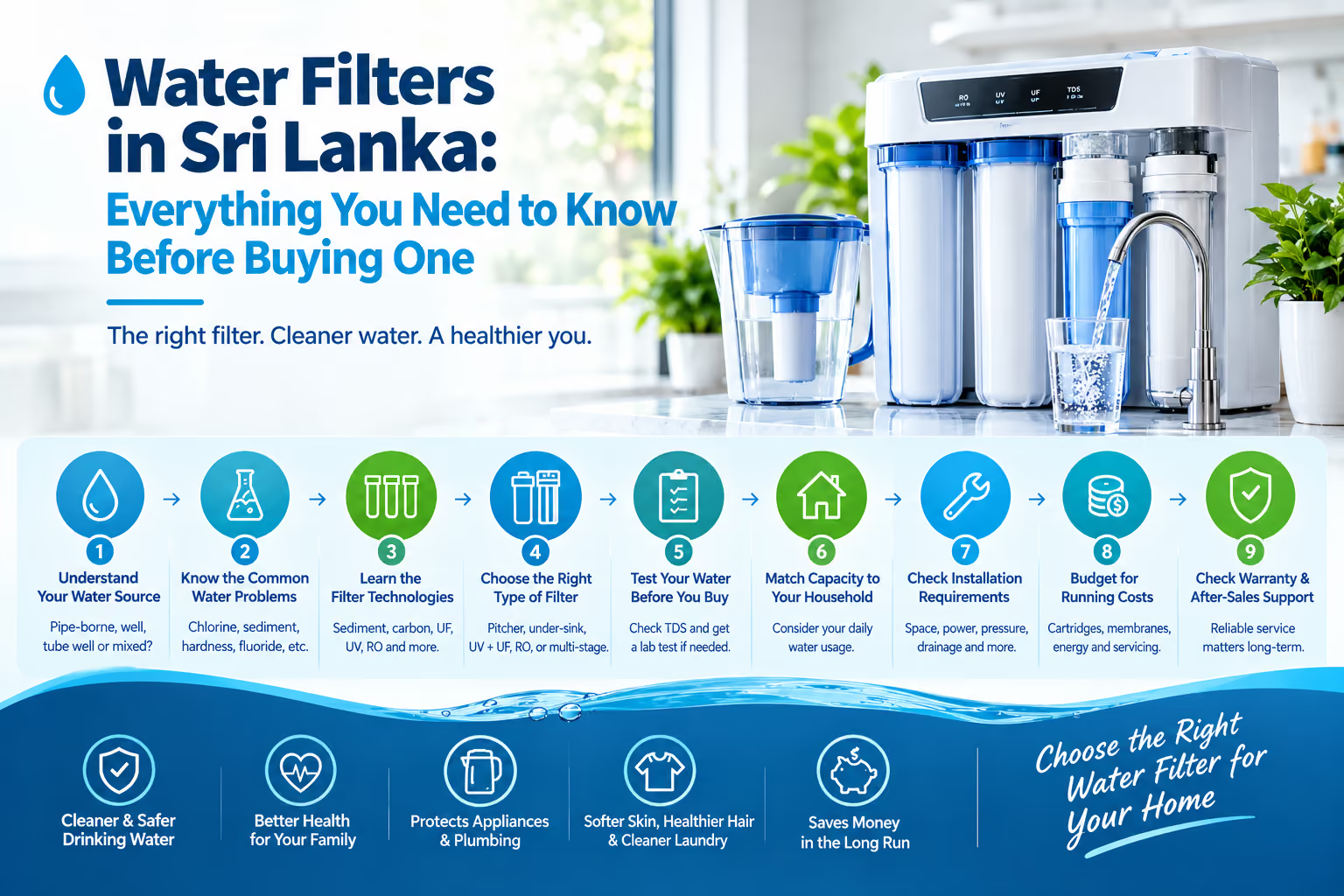
Buying a water filter should be simple, but it rarely feels that way. One shop insists you need reverse osmosis, another says a basic filter is plenty, and online reviews contradict each other. Meanwhile the real answer depends on something nobody has asked you about: what is actually in the water coming into your home. This complete guide from Purehydro walks you through everything worth knowing about water filters in Sri Lanka before you spend a cent.
Before buying water filters in Sri Lanka, test your water first. Your source and TDS level decide the technology you need. Treated pipe-borne water with low TDS usually needs UV + UF. Well water, hard water, or high-TDS supplies need RO + UV with TDS control. Then match the capacity to your household size, check installation requirements, and budget for cartridge replacements every 6 to 12 months. Buying the right type matters far more than buying the most expensive one.
Everything starts here.
The simple rule: low TDS with germ risk needs UV and UF; high TDS or dissolved contaminants need RO.
Affordable, portable, and need no installation. A water filter pitcher suits small households wanting better-tasting tap water, though cartridges need frequent replacement.
Tucked out of sight and connected to your existing tap. Good for improving taste and removing sediment where water quality is already reasonable.
The practical choice for treated city water with low TDS. A UV + UF purifier protects against bacteria and viruses while keeping natural minerals.
Necessary for hard, salty, or high-TDS water. An RO purifier with TDS control removes dissolved impurities while maintaining good taste.
The most complete household option. An RO + UV + UF system with mineral retention handles both dissolved and microbial concerns, ideal for homes using well water.
Offices, schools, hotels, hospitals, and factories need far higher output. A commercial RO system serves large numbers of people daily.
Testing costs little compared to buying the wrong system.
A small family needs far less daily output than a large household or a workplace. Consider the number of people, how much water you use for drinking and cooking, and whether you need storage for power outages. Undersizing means running out; oversizing means paying for capacity you never use.
The purchase price is only part of the picture. Factor in replacement cartridges every 6 to 12 months, RO membranes every 2 to 3 years, annual UV lamp replacement, electricity for UV and RO systems, and servicing. A cheaper purifier with expensive or hard-to-find cartridges can cost more over five years than a better unit.
Ask what the warranty covers and for how long, whether replacement cartridges are readily available, whether servicing is offered in your area, and how quickly support responds. A purifier is a long-term purchase, so the supplier matters as much as the product.
Prices vary widely by type, from simple pitchers to multi-stage RO systems and industrial plants. Running costs for cartridges matter as much as the purchase price, so compare total cost over several years.
It depends on your water. UV + UF suits low-TDS treated supply, while RO + UV suits hard, salty, or high-TDS well water.
Even treated water can pick up contamination through pipelines and storage tanks, and well water often carries hardness, fluoride, or bacteria. A suitable filter adds meaningful protection.
Most cartridges last 6 to 12 months, with RO membranes lasting around 2 to 3 years. Hard water and heavy use shorten these intervals.
Boiling kills germs but does not remove hardness, fluoride, nitrates, heavy metals, or salt.
What is the difference between a filter and a purifier? A filter removes particles and improves taste, while a purifier also removes or inactivates microorganisms and, in RO models, dissolved contaminants.
Can one purifier handle both well and tap water? Yes. Choose a multi-stage system designed for the harder source.
Do water filters remove healthy minerals? RO removes most dissolved minerals, which is why TDS control and mineral cartridges exist. UV and UF do not remove minerals.
Can I install a water filter myself? Simple pitchers need no installation, but UV, RO, and under-sink systems are best installed professionally to avoid leaks and ensure correct setup.
Which filter suits offices and schools? Higher-capacity RO + UV systems or commercial RO plants, sized to the number of daily users.
Purehydro offers a complete range of Purehydro and Kent water purification solutions across Sri Lanka, from affordable water filter pitchers and under-sink filters to RO + UV + UF dispensers and industrial RO plants. We serve homes, offices, schools, hospitals, hotels, and factories, and we recommend the technology your water actually needs, with professional installation for select models and warranty-backed products.
The best purifier is the one matched to your water source, household size, and budget over time. Contact Purehydro today for expert advice and an honest recommendation before you buy.