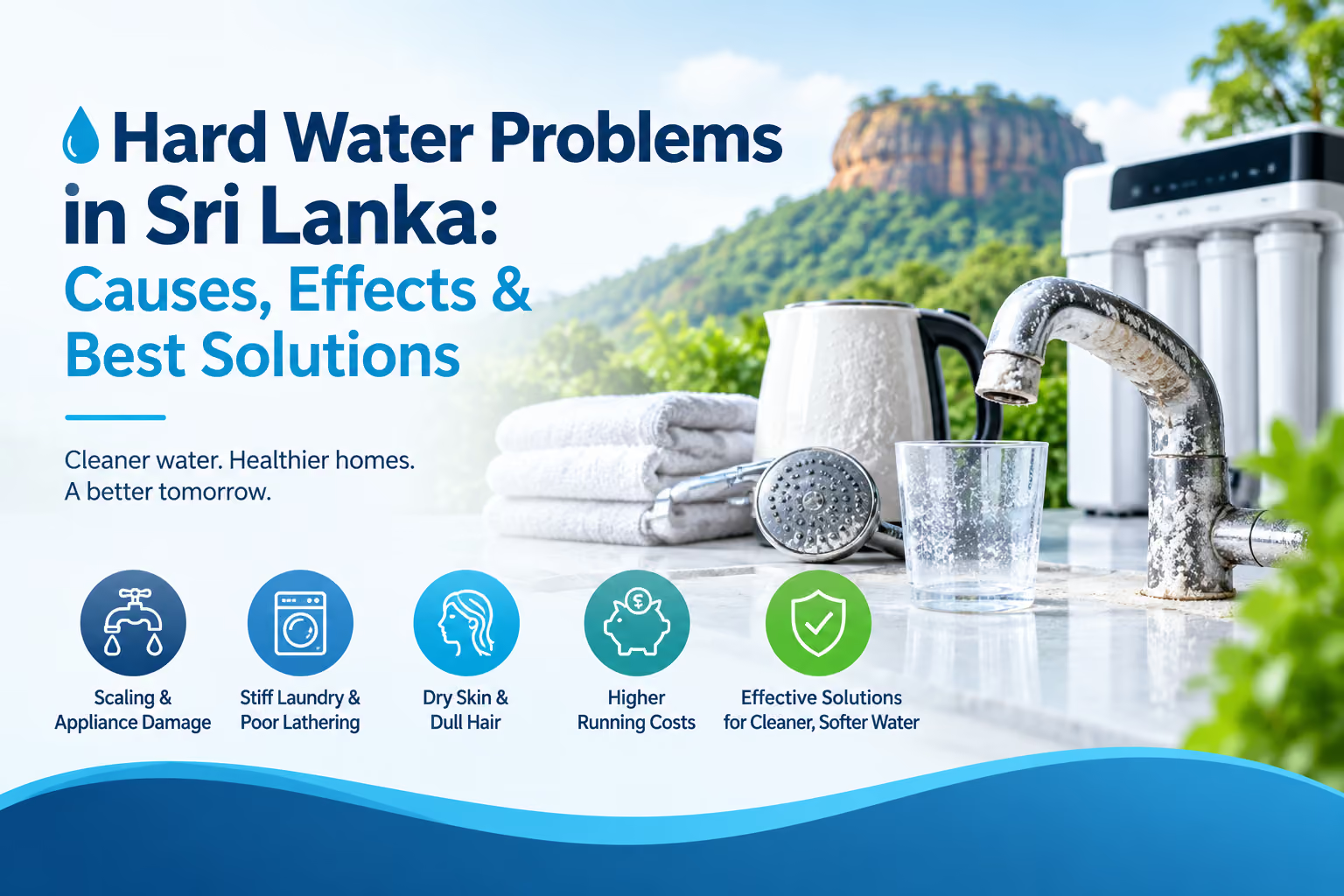
White crust around your taps. Soap that refuses to lather. A kettle that builds a chalky layer within weeks. Clothes that come out of the wash feeling stiff. Skin that feels dry and tight after bathing. If several of these sound familiar, your household is almost certainly dealing with hard water. It is one of the most widespread yet least understood water issues on the island, particularly in the dry zone. In this guide, Purehydro explains what causes hard water problems in Sri Lanka, the damage it quietly does, and the solutions that actually work.
Hard water problems in Sri Lanka are caused by high levels of dissolved calcium and magnesium picked up as groundwater passes through limestone and mineral-rich rock. It is most common in dry zone and north central areas such as Anuradhapura, Polonnaruwa, and Vavuniya, and in households relying on wells and boreholes. Hard water causes scaling, appliance damage, poor lathering, dry skin, and stiff laundry. For drinking water, reverse osmosis is the most effective household solution.
Water hardness refers to the amount of dissolved calcium and magnesium in your water. Rainwater is naturally soft, but as it filters through soil and rock, it dissolves minerals along the way. Limestone and dolomite-rich ground adds the most, which is why groundwater is usually harder than surface water.
There are two types:
Hard water is not generally considered dangerous to drink, but it causes significant practical problems and can carry other dissolved contaminants alongside the hardness.
Hardness varies even within a single district, so two neighbouring homes can have noticeably different water.
Scale builds up inside water heaters, kettles, washing machines, dishwashers, and coffee machines. A layer of scale insulates heating elements, so appliances work harder, consume more electricity, and fail sooner.
Mineral deposits gradually narrow pipe interiors, reducing water pressure and flow. Over years, this can mean expensive plumbing work.
Scale inside tanks and collectors reduces heating efficiency, which is why homes in hard water areas need more frequent descaling.
Hard water leaves mineral and soap residue on skin and hair. Many people report dryness, itchiness, and dull hair, and those with sensitive skin or eczema often find symptoms worse.
Minerals react with detergent, reducing its cleaning power. You end up using more detergent, and fabrics become stiff and wear out faster.
Higher electricity bills, more detergent and soap, shorter appliance life, and plumbing repairs all add up quietly over time.
A TDS meter is useful but measures all dissolved solids, not hardness specifically. For well water, a proper laboratory test is worth the cost.
Reverse osmosis is the most effective household method for removing hardness from drinking water. An RO purifier with TDS control reduces calcium and magnesium while keeping the water pleasant to drink rather than flat. For homes facing both hardness and microbial risk, an RO + UV + UF system with mineral retention covers both concerns.
Hotels, schools, hospitals, and factories in hard water areas need higher capacity. A commercial RO system can supply large volumes of treated drinking water while handling demanding mineral loads.
Treating all the water entering your home, rather than just drinking water, requires a different approach such as a water softener or scale-reduction system sized to your household. Speak to a specialist about what suits your supply and usage.
Descale kettles and showerheads regularly with a suitable descaling product, use slightly more detergent or a hard-water-formulated one for laundry, fit a showerhead filter if skin dryness is the main concern, flush your water heater periodically, and dry taps and tiles after use to limit visible deposits.
Hardness is most commonly reported in dry zone and north central districts such as Anuradhapura, Polonnaruwa, and Vavuniya, where groundwater passes through mineral-rich rock. Hardness also occurs in parts of the north and some coastal areas.
Hard water is not generally considered harmful, but it causes practical problems and may occur alongside other contaminants such as fluoride or nitrates, which is why testing matters.
Boiling reduces temporary hardness but leaves the minerals as scale in your kettle. It does nothing for permanent hardness.
Hard water does not directly cause hair loss, but mineral and soap residue can leave hair dry, dull, and more prone to breakage.
Reverse osmosis removes most dissolved hardness. Models with TDS control or mineral retention help keep the treated water tasting balanced.
What is the best filter for hard water? Reverse osmosis is the most effective option for drinking water. Whole-house hardness usually needs a softener or scale-reduction system.
Does hard water damage washing machines? Yes. Scale builds up on heating elements and internal parts, reducing efficiency and shortening appliance life.
Will a water softener make water safe to drink? A softener addresses hardness but does not remove bacteria, fluoride, or other contaminants. Drinking water usually still needs purification.
Does hard water affect solar water heaters? Yes. Scale reduces heating efficiency, so homes in hard water areas need more frequent descaling and servicing.
Purehydro offers a complete range of Purehydro and Kent water purification solutions across Sri Lanka, from water filter pitchers and under-sink filters to RO + UV + UF systems and industrial RO plants. We serve homes, offices, schools, hospitals, hotels, and factories, helping each customer match the right technology to their water conditions, with professional installation for select models and warranty-backed products.
Hard water quietly costs you money, damages appliances, and affects your comfort every day. Contact Purehydro today for expert advice and the right hard water solution for your home or business.