Walk into any appliance showroom in Sri Lanka and reverse osmosis will almost certainly be recommended to you. It is the most talked-about water purification technology on the market, and also the most oversold. RO is genuinely the right answer for many Sri Lankan households, particularly those using well water, but it is unnecessary for others and comes with trade-offs worth understanding first. In this guide, Purehydro explains what an RO water filter actually does, who truly needs one, and how to decide if it suits your home.
Quick Answer: What Is an RO Water Filter?
An RO water filter uses reverse osmosis, pushing water under pressure through a semi-permeable membrane with pores fine enough to block dissolved substances. It removes hardness, fluoride, salts, nitrates, heavy metals, and most chemical contaminants, which no basic filter can do. RO is the right choice for high-TDS water, well water, and hard or salty supplies. For low-TDS treated city water, a UV + UF purifier is often more suitable.
How Does Reverse Osmosis Work?
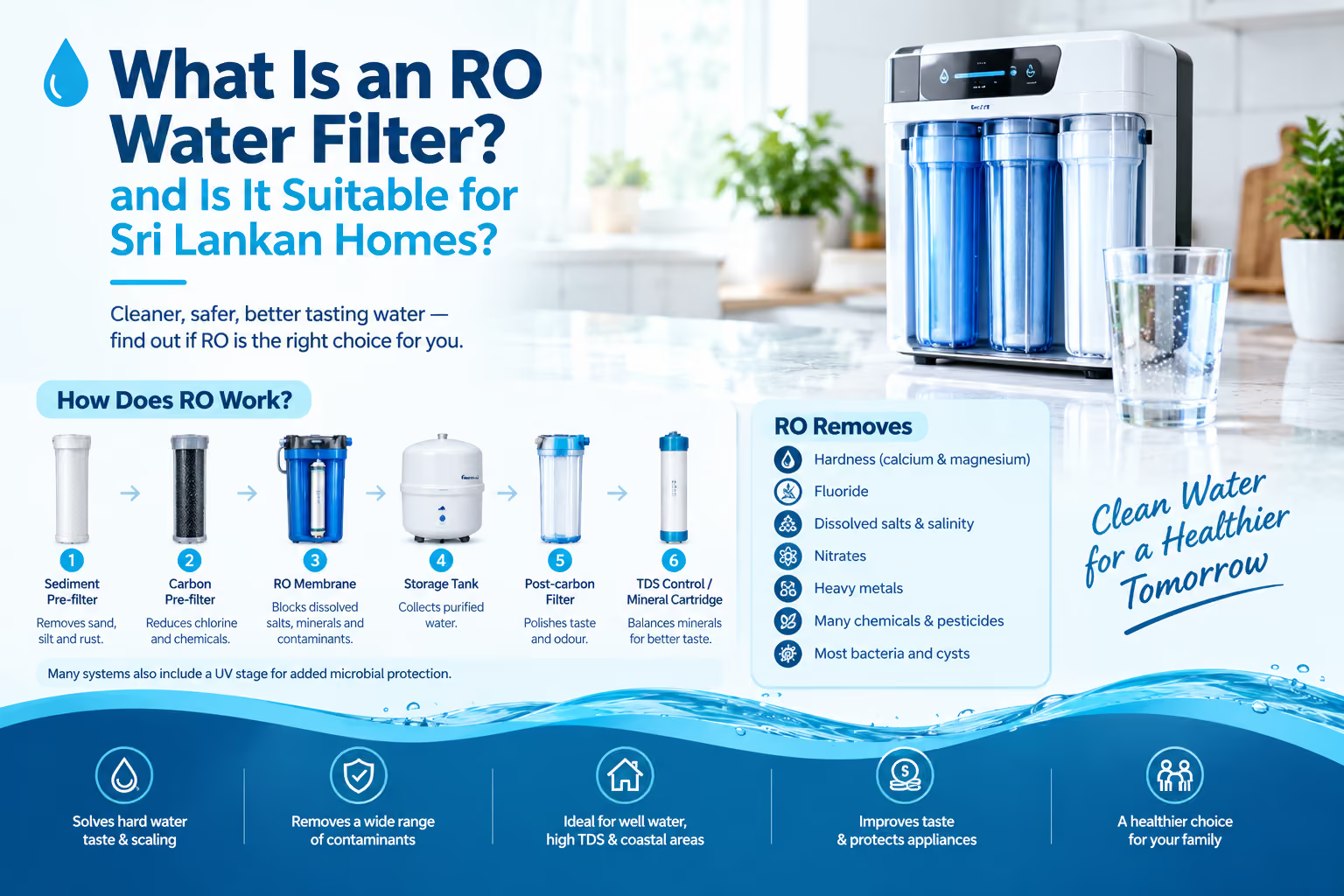
Water passes through several stages in a typical RO system:
- Sediment pre-filter: Removes sand, silt, and rust that would damage the membrane.
- Carbon pre-filter: Reduces chlorine and chemicals that degrade the RO membrane.
- RO membrane: Household pressure forces water through an extremely fine membrane. Dissolved salts, minerals, and contaminants are rejected and flushed away.
- Storage tank: Purified water collects, since RO produces water slowly.
- Post-carbon filter: Polishes the taste before dispensing.
- TDS control or mineral cartridge: Reintroduces or retains a balanced mineral level for better taste.
Many systems also add a UV stage for microbial protection.
What an RO Water Filter Removes
Benefits of an RO Water Filter
- Broadest contaminant removal: No other household technology removes as wide a range of dissolved impurities.
- Solves hard water taste: Removes the chalky, mineral flavour common in dry zone water.
- Handles salty water: The only practical household answer for brackish coastal supplies.
- Reduces fluoride: Important in districts where fluoride levels are elevated.
- Improves taste noticeably: Especially with a post-carbon and mineral stage.
- Works on well water: Suitable where untreated groundwater carries dissolved contaminants.
- Scales up for businesses: Available from household units to industrial plants.
Limitations of RO You Should Know
Being clear about the drawbacks helps you decide honestly.
- Produces wastewater: RO rejects a portion of water as concentrate. Modern systems are more efficient than older ones, but some waste is unavoidable.
- Needs electricity and pressure: RO will not operate during a power cut, and low mains pressure may require a booster pump.
- Slower output: Water fills a storage tank gradually rather than on demand.
- Removes beneficial minerals too: Which is why TDS control and mineral cartridges exist.
- Higher upfront and running cost: Membranes and multiple cartridges cost more than a simple filter.
- Unnecessary for low-TDS water: Using RO on already-soft treated water adds cost and waste for little benefit.
Is an RO Water Filter Suitable for Your Sri Lankan Home?
You Likely Need RO If
- You use well, tube well, or borehole water.
- Your water tastes salty, hard, or metallic.
- A TDS meter shows high dissolved solids.
- You see white scaling on kettles and taps.
- You live in a dry zone or north central district where hardness and fluoride are common.
- Your home is in a coastal area where wells draw brackish water.
- You live in a farming district where nitrates may be present.
You Probably Do Not Need RO If
- You are on treated pipe-borne city water with low TDS.
- Your main concerns are chlorine taste and sediment.
- Testing shows no hardness, fluoride, or salinity issues.
In that case a UV + UF purifier usually offers better value, since it protects against microorganisms without removing minerals or wasting water.
Choosing the Right RO System
- Check your TDS level: This is the single most important number for deciding whether RO is needed.
- Match capacity to household size: Larger families need higher daily output and storage.
- Look for TDS control: Essential for avoiding flat-tasting water.
- Consider combined technologies: An RO + UV + UF system with mineral retention covers dissolved and microbial concerns together.
- Plan for installation: Consider space, drainage for reject water, and a power point.
- Check water pressure: Low pressure may need a booster pump.
- Review maintenance costs: Ask about cartridge and membrane replacement intervals and prices.
- Think about businesses separately: Offices, schools, hotels, and factories usually need a commercial RO system.
Step-by-Step: How to Decide if RO Is Right for You
- Identify your water source: Pipe-borne supply, well, or both.
- Observe the water: Note taste, smell, cloudiness, and any staining.
- Check for scaling: White deposits indicate hardness.
- Measure TDS: Use a digital TDS meter for a quick reading.
- Get a laboratory test: Essential for well water. Test for hardness, fluoride, nitrates, chloride, iron, and bacteria.
- Apply the rule: High TDS, hardness, fluoride, or salinity means RO. Low TDS with germ risk means UV + UF.
- Size the system: Match output to your daily usage.
- Get expert advice: Share your test results with a water purification specialist before buying.
RO Maintenance Basics
Replace sediment and carbon pre-filters roughly every 6 to 12 months, since neglecting them shortens membrane life considerably. RO membranes typically last around 2 to 3 years, less in very hard or high-TDS water. Service UV lamps annually where fitted, sanitise the storage tank during servicing, and watch for rising TDS readings or slower output, which signal that the membrane is nearing the end of its life.
Most Searched Questions About RO Water Filters in Sri Lanka
Does RO water remove all minerals?
RO removes most dissolved minerals, including beneficial ones. Systems with TDS control or mineral cartridges restore a balanced level for better taste.
Is RO water safe to drink daily?
Yes. RO water is widely used for daily drinking. Where mineral content is a concern, choose a model with mineral retention and maintain a varied diet.
How much water does an RO system waste?
RO rejects a portion of water as concentrate. The ratio varies by model and water quality, and newer systems are generally more efficient than older designs.
Do I need RO if I live in Colombo?
Usually not. Treated city water generally has low TDS, so UV + UF is often sufficient unless testing shows otherwise.
Does RO remove bacteria?
RO blocks most bacteria and cysts, but many households prefer RO combined with UV for stronger microbial assurance.
Frequently Asked Questions (FAQs)
What is the difference between RO and UV? RO removes dissolved substances such as salts, hardness, and fluoride. UV inactivates bacteria and viruses but removes nothing dissolved.
Does RO water taste different? It tastes cleaner and less mineral-heavy. Very low TDS can taste flat, which TDS control addresses.
Can RO work without electricity? No. RO needs power and adequate pressure, so it will not operate during a power cut.
How long does an RO membrane last? Typically 2 to 3 years, depending on water quality, usage, and whether pre-filters are changed on time.
Is RO worth it for a small family? If your water is hard, salty, or high in TDS, yes. If your supply is already low in dissolved solids, a simpler purifier is usually better value.
Why Choose Purehydro?
Purehydro offers a complete range of Purehydro and Kent water purification solutions across Sri Lanka, from water filter pitchers and under-sink filters to RO + UV + UF systems and industrial RO plants. We serve homes, offices, schools, hospitals, hotels, and factories, and we recommend RO only where your water actually needs it, with professional installation for select models and warranty-backed products.
Find Out if RO Is Right for Your Water
The best purifier is the one matched to your actual water conditions, not the most expensive one on the shelf. Contact Purehydro today for expert advice and an honest recommendation for your home or business.