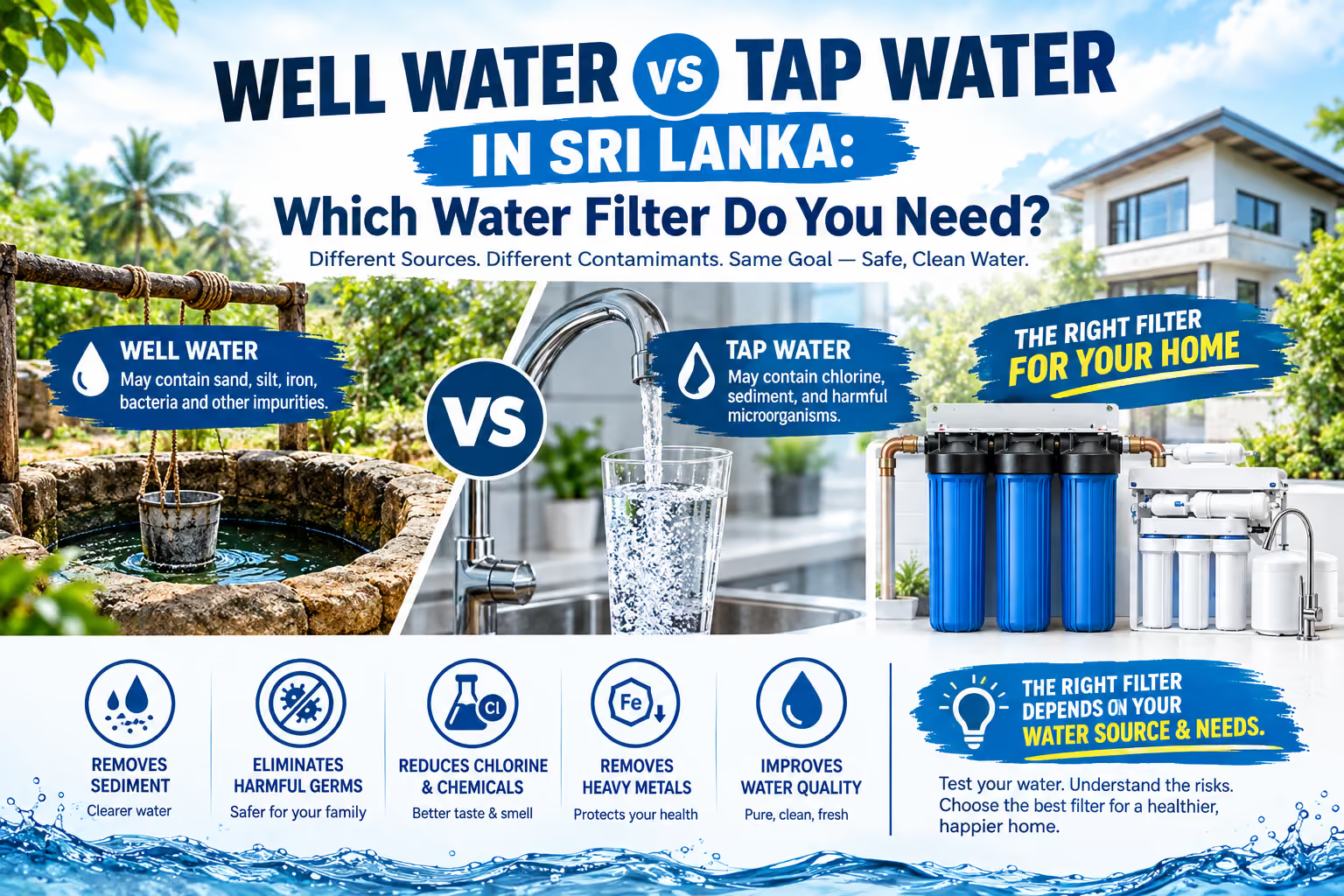
Across Sri Lanka, households get their drinking water from two main sources: pipe-borne tap water and wells. Many homes even use both. But the water coming from each source behaves very differently, and so does the filter needed to make it safe. Choosing the wrong purifier can mean paying for technology you do not need, or worse, drinking water that still contains harmful contaminants. In this guide, Purehydro explains the key differences between well water and tap water in Sri Lanka, and how to choose the right water filter for your home or business.
When comparing Well Water vs Tap Water, the right filter depends on your water quality. Treated tap water usually has low dissolved solids, so a UV + UF or UF + carbon purifier is often enough to remove bacteria, sediment, and chlorine taste. Well water often has higher hardness, dissolved salts, iron, or fluoride, so an RO + UV purifier with TDS control is usually the better choice. Testing your water first is the most reliable way to decide.
Pipe-borne water in Sri Lanka is treated and disinfected before it reaches homes. However, its quality can change on the way to your glass. Common issues include:
Because tap water usually has low dissolved solids, it rarely needs RO filtration. Instead, the focus is on removing microorganisms, sediment, and unpleasant taste.
Well water comes directly from underground sources and is usually not treated. Its quality depends heavily on location, soil type, depth, and nearby activities. Common concerns include:
Boiling well water kills germs, but it does not remove hardness, fluoride, heavy metals, nitrates, or dissolved salts. That is why many families using well water choose RO purification.
If your tap water has low TDS, a UV + UF water purifier is a strong choice for removing bacteria, viruses, and sediment. For homes that mainly want to improve taste and reduce chlorine, a UF + carbon purifier, under-sink purifier, or water filter pitcher can also work well.
If your well water is hard, salty, or high in dissolved solids, choose an RO + UV purifier with TDS control. This combination removes dissolved impurities and microorganisms while helping maintain a pleasant, balanced taste.
If you switch between tap and well water, choose a purifier designed for the harder source. A multi-stage RO + UV + UF system with TDS control handles both reliably.
Larger organisations need higher daily capacity. A commercial RO system can supply clean drinking water for hundreds of people every day.
As a general guide, low-TDS water is usually suitable for UV + UF purifiers, while water with high TDS typically needs RO purification.
Replace filters on schedule, typically every 6 to 12 months depending on usage and water quality. Clean storage tanks regularly, service UV lamps and RO membranes as recommended, and watch for changes in taste, flow rate, or TDS readings. Well water users may need more frequent filter changes because of higher sediment and mineral levels.
Well water may look clear but can contain bacteria, hardness, fluoride, or other contaminants. It should be tested and properly purified before drinking.
Tap water is treated, but contamination can occur through pipelines and storage tanks. Using a purifier adds an extra layer of protection.
Usually not. Tap water often has low TDS, so UV + UF is typically enough. RO is mainly needed when TDS or dissolved contaminants are high.
Boiling kills germs, but it does not remove hardness, fluoride, heavy metals, nitrates, or salts.
Lower TDS water generally tastes better, but extremely low TDS may taste flat. Purifiers with TDS control help achieve a balanced level.
Which is better, well water or tap water? Tap water is treated and usually more consistent, while well water quality varies widely. Both benefit from the right purification.
What is the best water filter for well water? An RO + UV purifier with TDS control is usually best for hard or high-TDS well water.
What is the best water filter for tap water? A UV + UF purifier is ideal for most tap water supplies with low TDS.
How often should I replace my water filter? Typically every 6 to 12 months, depending on water quality and usage.
Do water filters remove bacteria and heavy metals? Advanced RO + UV systems remove bacteria, viruses, and heavy metals. UV + UF systems focus on microorganisms and sediment.
Purehydro offers a wide range of Purehydro and Kent water purification systems in Sri Lanka, from affordable water filter pitchers and under-sink purifiers to RO + UV dispensers and large-scale industrial RO plants. Our solutions serve homes, offices, schools, hospitals, hotels, and factories, with professional installation for select models, warranty coverage, and expert advice to help you choose the right filter for your water source.
Whether your home uses well water, tap water, or both, the right filter makes all the difference. Contact Purehydro today for expert advice and find the perfect water purifier for your needs.