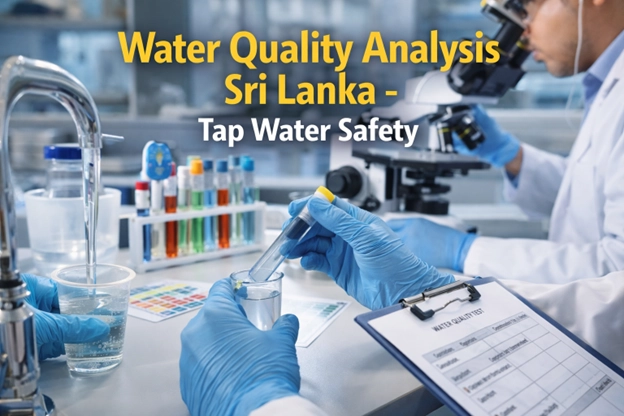
Access to clean drinking water is essential for health, productivity, and quality of life. In Sri Lanka, many households rely on tap water supplied by municipal systems, while others use wells, tube wells, or private water sources. This raises an important question: Is tap water safe to drink in Sri Lanka?
The answer is not a simple yes or no. While tap water in many urban areas meets safety standards, water quality can vary depending on location, infrastructure, treatment processes, and environmental conditions.
This comprehensive guide explains how tap water is treated in Sri Lanka, what contaminants may be present, health risks, regional differences, and whether additional filtration is necessary.
Sri Lanka’s main public water supply is managed by the National Water Supply and Drainage Board (NWSDB). This organization is responsible for:
Water sources include:
These sources undergo treatment before reaching households through municipal pipelines.
Water treatment plants follow several purification stages to remove contaminants and ensure safety.
Chemicals are added to bind dirt, particles, and impurities into larger clusters called flocs.
This helps remove:
The heavy particles settle at the bottom of large tanks.
This removes most visible impurities.
Water passes through filtration media such as:
This stage removes:
Chlorine is added to kill harmful microorganisms, including:
Chlorination also protects water during distribution through pipelines.
The treated water is transported through pipes to homes and businesses.
At this stage, water is generally safe at the treatment plant level.
However, risks can arise during distribution.
This is a critical distinction.
Water leaving treatment plants is usually safe. But by the time it reaches your tap, quality can change due to:
This means safety depends not only on treatment but also on delivery infrastructure.
Although municipal water meets safety standards, several contaminants may still be present in trace amounts.
Chlorine is essential for disinfection but may cause:
Chlorine itself is not dangerous at regulated levels but affects water quality experience.
Heavy metals can enter water through:
Possible metals include:
Long-term exposure to certain heavy metals can affect health.
If water becomes contaminated during distribution, it may contain:
This risk increases when:
Sediments can enter through:
This causes:
In rural and agricultural regions, contaminants may include:
These enter groundwater through soil absorption.
Water safety varies significantly across Sri Lanka depending on location.
Urban tap water is generally safe due to:
However, building plumbing and storage tanks still affect final quality.
Some rural areas rely on:
These sources may contain:
Groundwater safety varies greatly by region.
Certain areas experience hard water, which contains high levels of:
Hard water is not harmful but may cause:
Chronic Kidney Disease of unknown etiology (CKDu) has been reported in some regions of Sri Lanka, especially agricultural zones.
Researchers believe possible causes may include:
While research continues, water quality remains an important consideration in affected areas.
Boiling water is a traditional and effective safety method.
Boiling removes:
However, boiling does NOT remove:
Boiling improves microbiological safety but does not improve chemical purity.
You can evaluate tap water safety using several indicators.
Warning signs include:
Clean water should appear clear.
Issues include:
These indicate chemical presence.
Risk increases if:
Professional water testing is the most reliable method.
Testing detects:
Bottled water is often perceived as safer.
However, it also has limitations:
Pros:
Cons:
In many cases, properly filtered tap water is equally safe and more economical.
While municipal water is generally treated, many households use additional filtration for extra protection.
Water filters help remove:
They also improve taste and smell.
This is especially useful in areas with:
Different filtration technologies address different contaminants.
RO systems remove:
They provide very high purification levels.
RO filters are ideal for:
UV filters use ultraviolet light to kill:
They do not remove dissolved solids.
Best for microbiological safety.
Ultrafiltration removes:
Works without electricity.
Carbon filters remove:
Common in household systems.
Even if municipal water is safe, storage tanks can contaminate water.
Common problems include:
Tanks should be cleaned every 6 months.
This is often overlooked.
Old plumbing can introduce contaminants.
Risk materials include:
Modern PVC plumbing reduces contamination risk.
Contaminated water can cause:
Short-term effects:
Long-term effects:
Children and elderly individuals are more vulnerable.
Sri Lanka follows water safety standards based on:
These standards regulate:
Municipal water usually complies with these standards at treatment plants.
Well water is common in many areas.
However, it carries higher risks:
Well water should always be tested and filtered.
Several environmental conditions influence water safety.
These include:
Heavy rain can temporarily reduce water quality.
Water filtration provides several advantages.
These include:
Improved safety
Better taste
Removal of harmful contaminants
Reduced chlorine exposure
Protection against infrastructure-related contamination
Companies like PureHydro offer filtration solutions designed for Sri Lanka’s specific water conditions, helping households achieve higher drinking water safety standards.
You can improve water safety with simple steps.
Clean tanks every 6 months.
Let water run for 30 seconds before use.
Filters improve water quality significantly.
Boiling protects against microorganisms.
Testing ensures safety.
Sri Lanka continues investing in:
Water safety is improving, but household-level precautions remain important.
Tap water in Sri Lanka is generally safe at the treatment plant level and in many urban areas. However, quality can be affected by pipelines, storage tanks, and local environmental factors.
For maximum safety and peace of mind, many households use additional filtration, especially in areas with groundwater use, older infrastructure, or hard water conditions.
With proper precautions, testing, and filtration when necessary, tap water can be made safe, clean, and suitable for daily drinking.