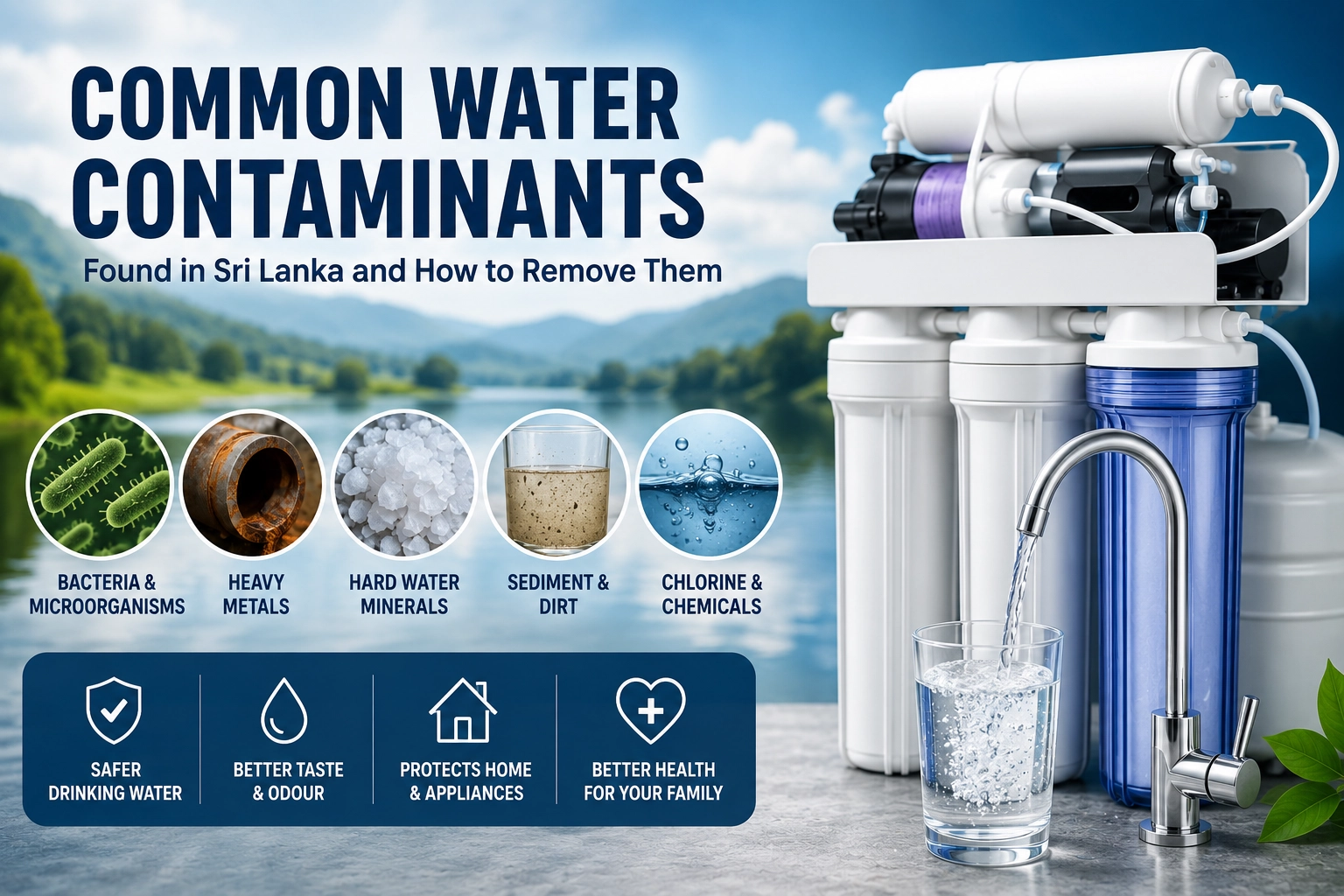
Clean drinking water is one of the most important parts of a healthy lifestyle. However, many households and businesses in Sri Lanka face water quality issues caused by natural minerals, industrial waste, agricultural runoff, and aging pipelines. Understanding the Common Water Contaminants found in Sri Lanka can help you choose the right water purification method and protect your family’s health.
Whether you use municipal water, well water, or groundwater, contamination can affect taste, smell, appearance, and safety. In this guide, we explain the most common contaminants found in Sri Lankan water sources, how they affect health, and the best ways to remove them effectively.
If you are looking for advanced water purification systems and filtration solutions, explore the range of products offered by Purehydro water purification systems.
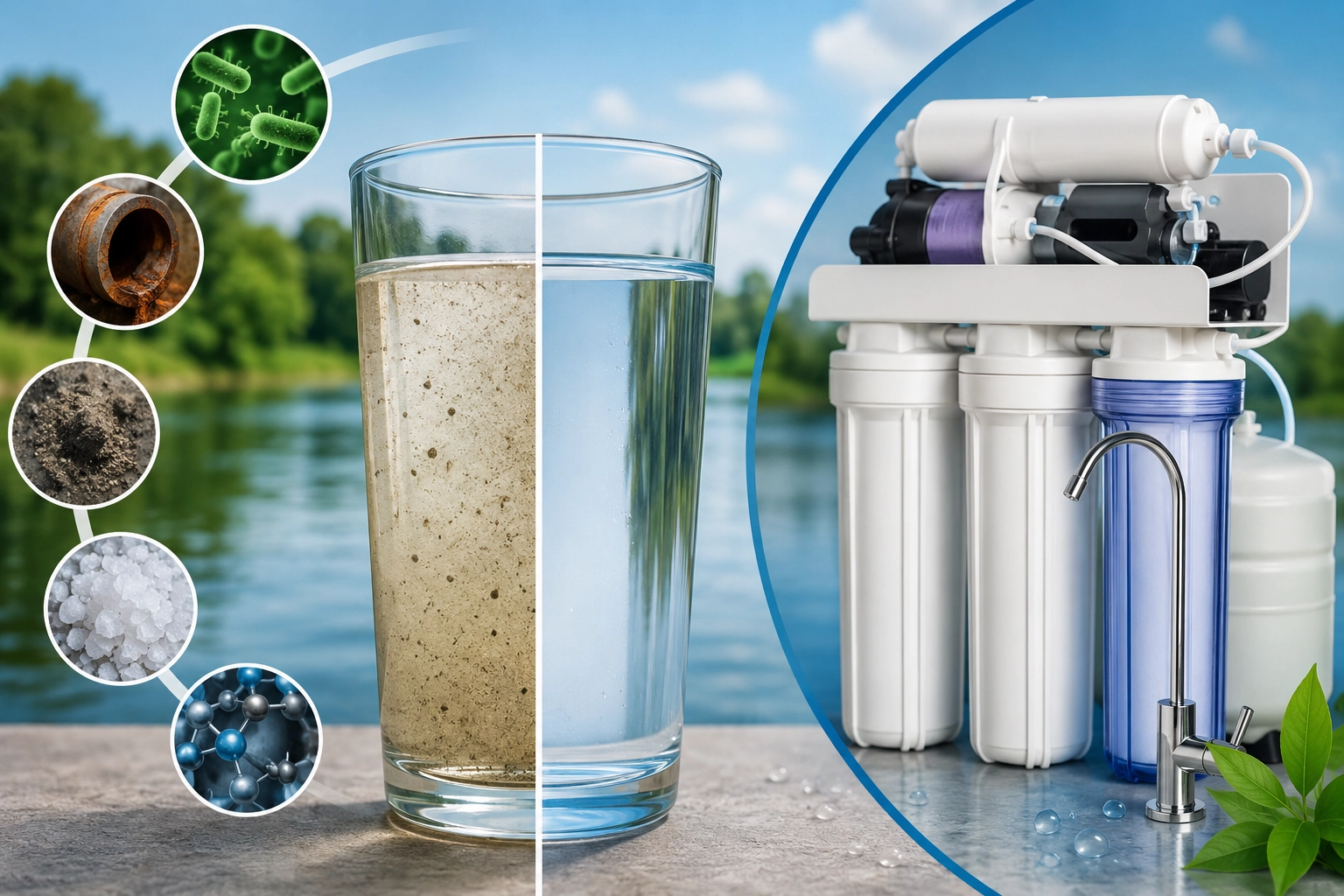
Sri Lanka has experienced rapid urbanisation, agricultural expansion, and industrial development over the years. While these developments support economic growth, they also contribute to increasing water pollution.
Common causes of water contamination include:
In some areas, even treated water may still contain impurities that affect quality and safety.
Below are the major contaminants commonly detected in Sri Lankan water supplies.
Hard water is one of the most widespread issues in Sri Lanka, especially in groundwater and well water sources.
Hard water contains high levels of:
Hard water is generally not dangerous to drink, but excessive mineral content may contribute to kidney stone risks in sensitive individuals.
Modern purification systems available through Purehydro water treatment solutions can effectively reduce mineral content and improve water quality.
Municipal water treatment plants commonly use chlorine to disinfect water supplies. While chlorine helps kill bacteria, excessive levels can affect water taste and smell.
Long-term exposure to certain chemical byproducts may lead to:
Heavy metal contamination is a serious concern in some regions of Sri Lanka.
Testing water regularly is highly recommended if you rely on groundwater or private wells.
Bacterial contamination is common during floods and heavy rainfall seasons in Sri Lanka.
Contaminated water can cause:
Certain regions in Sri Lanka have naturally high fluoride levels in groundwater.
Dry zone regions often report higher fluoride concentrations in well water.
Sediment contamination is common in both urban and rural water systems.
Many homeowners do not realise their water is contaminated until problems become severe.
If you notice any of these issues, it may be time to install a proper filtration system.
Choosing the correct water purification system depends on your water source and contamination level.
Before buying a filtration system:
Different contaminants require different treatment methods.
Water IssueRecommended SolutionHard waterWater softenerBacteriaUV purifierHeavy metalsReverse osmosisSedimentSediment filterChlorineCarbon filter
Modern purification systems often combine multiple technologies, including:
You can explore advanced household and commercial systems through Purehydro filtration products.
Regular maintenance is essential for effective purification.
Reverse osmosis (RO) is one of the most effective water purification technologies available today.
RO systems use a semi-permeable membrane to remove:
This makes RO systems highly suitable for Sri Lankan households facing multiple contamination issues.
Tap water safety varies by region. While many urban areas receive treated water, additional filtration is often recommended to remove chlorine, sediment, and residual contaminants.
Hard water, bacterial contamination, and excess fluoride are among the most common issues reported across Sri Lanka.
The only reliable way is through professional water testing. However, metallic taste, discoloration, or nearby industrial activity may indicate possible contamination.
A multi-stage filtration system with reverse osmosis and UV purification is often the best choice for handling multiple contaminants commonly found in Sri Lankan water.
Boiling can kill bacteria and microorganisms but does not remove heavy metals, chemicals, or dissolved minerals.
This depends on water quality and usage, but most filters require replacement every 6–12 months.
Installing a proper purification system offers several advantages:
Reduces exposure to harmful contaminants and bacteria.
Improves water smell, clarity, and flavour.
Prevents scaling and mineral buildup.
Reduces bottled water costs and appliance repairs.
Ensures safer drinking water for the entire family.
Using the wrong filtration system may not fully remove contaminants. Professional water treatment providers can:
For customised residential and commercial water purification solutions, Purehydro offers advanced filtration technologies designed for Sri Lankan water conditions.
If you need help choosing the right water purification system for your home or business, you can contact Purehydro for expert guidance and support.
Water contamination is a growing issue across Sri Lanka, affecting both urban and rural communities. Understanding the Common Water Contaminants found in local water supplies is the first step toward protecting your health and improving water quality.
From hard water minerals and chlorine to bacteria and heavy metals, each contaminant requires the right purification approach. Investing in a reliable water treatment system can significantly improve your drinking water safety, appliance lifespan, and overall quality of life.
Whether you are looking for home filtration systems, commercial purification solutions, or expert water treatment advice, Purehydro provides reliable technologies tailored to Sri Lankan conditions.