Is a Home Filtration System Necessary for Every Household in Sri Lanka?
6 min read
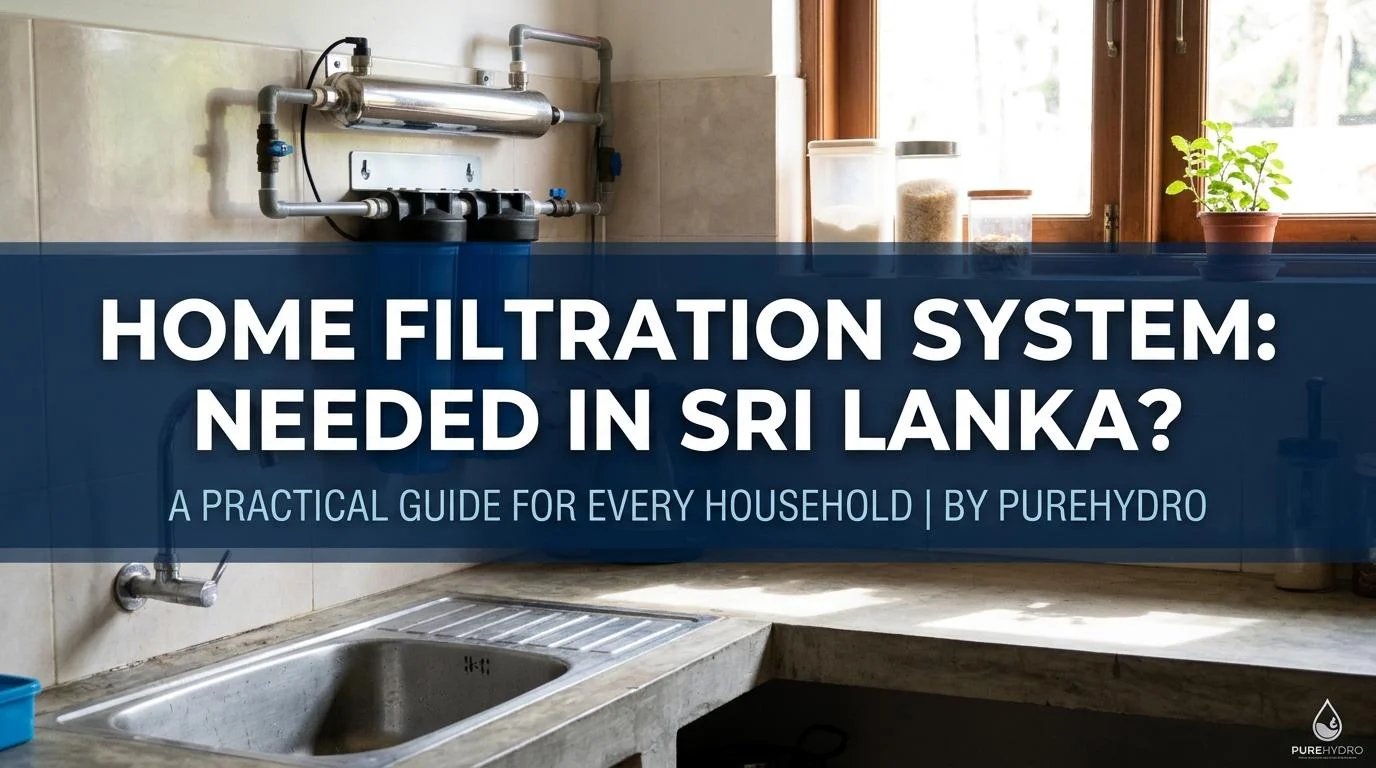
Quick answer: Not every household needs the same setup, but most benefit from knowing exactly what is in their water. A home filtration system is strongly worth considering if you use well or borehole water, live in an area with hard or mineral-rich groundwater, see cloudy or discoloured water, notice taste or odour problems, or have no way to treat water for bacteria. If your water has been tested and meets drinking standards at the tap, a full system may not be necessary. The right decision starts with a water test, not a purchase.
Many families in Sri Lanka rely on very different water sources, from piped supply in Colombo apartments to shallow wells in the dry zone. This guide from Purehydro explains when a filtration system makes sense, how to choose one, and the questions people ask most often.
Why Water Quality Differs So Much Across Sri Lanka
Total piped water coverage in Sri Lanka was 61.6% in 2023, according to figures presented to Parliament, with the National Water Supply and Drainage Board serving 48.1% and community-based organisations and others serving 13.5%. That means a large share of households still depend on other sources such as wells, springs and rainwater.
Groundwater quality varies by location. Researchers have found that groundwater chemistry across the country shows strong regional differences, and higher nitrate levels appear in districts with more agricultural land. In dry-zone areas where wells are the main drinking source, studies have reported hardness, total dissolved solids and fluoride above recommended limits in many samples. Research into chronic kidney disease of unknown cause (CKDu) is ongoing and the cause is not settled, but water chemistry is one of the factors scientists continue to study.
Piped water can also change on its way to your tap. Old pipes, storage tanks, low pressure and sediment can affect taste, clarity and safety even when the water leaves the treatment plant in good condition.
Does Your Household Need a Home Filtration System?
Use this quick guide:
| Your situation | Is a filtration system likely to help? |
|---|---|
| Well, borehole or spring water | Very likely, but test the water first |
| Hard water, limescale or salty taste | Likely, with the right technology |
| Cloudy, yellow or brown water | Yes, at least for sediment |
| Chlorine taste or odour from piped water | Possibly, a carbon filter may help |
| Concerns about bacteria | Needs disinfection, such as boiling or UV treatment |
| Water tested and within standards | May not be necessary |
How to Decide: Step by Step
Step 1: Identify Your Water Source
Note whether your water comes from the mains, a well, a borehole, a tank or a combination. Each source carries different risks.
Step 2: Check What You See, Taste and Smell
Look for cloudiness, particles, staining, scale in kettles, a salty or metallic taste, or a chlorine smell. These are clues, but they do not tell the whole story, because some contaminants have no taste or colour.
Step 3: Test Your Water
Use a reputable laboratory or qualified provider to test the water you drink. Ask for the parameters that matter in your area, such as pH, hardness, total dissolved solids, turbidity, nitrate, fluoride, iron and microbial contamination. Test results show what you actually need to remove.
Step 4: Match the Technology to the Problem
No single filter solves everything. The table below shows common options.
| Technology | What it is generally used for | Limits |
|---|---|---|
| Sediment filter | Removes sand, rust and particles | Does not remove dissolved chemicals or germs |
| Activated carbon filter | Reduces chlorine, odour and some organic chemicals | Does not remove dissolved salts or all germs |
| Reverse osmosis (RO) | Reduces many dissolved salts, including fluoride and nitrate | Needs pressure, produces reject water and needs servicing |
| UV disinfection | Inactivates bacteria and viruses | Does not remove chemicals, and the water must be clear |
| Water softener | Reduces scale caused by hardness | Not a drinking water purifier by itself |
Most households use a combination, such as sediment and carbon filtration, with RO or UV added where the test results call for it.
Step 5: Choose the Right Size and Type
Consider whether you need a point-of-use unit for drinking water at one tap or a whole-house setup for all outlets. Think about household size, daily water use, water pressure and available space. Browse the home filtration system options on Purehydro’s products page to compare what is available.
Step 6: Check Certification and Support
Ask for test data, certification and clear information on what the unit removes. Confirm installation, warranty, spare parts and servicing before you buy.
Step 7: Plan Maintenance
Filters stop working properly when they are not maintained. Follow the replacement schedule for cartridges, membranes and UV lamps, and re-test your water from time to time.
Most Searched Questions About Home Filtration Systems
Is a home water filter necessary in Sri Lanka?
It depends on your source and water quality. Households using wells or boreholes, or those with known problems, are the strongest candidates. Others should test first before deciding.
Is tap water safe to drink in Sri Lanka without filtering?
Water quality varies by area and supply, so there is no single answer. Pipe-borne water is treated, but problems can arise in storage tanks and pipes. If you are unsure, test your water and consider boiling or filtering.
What is the best home filtration system?
The best system is the one that targets the contaminants found in your test results. A system chosen without testing may remove things you do not need and miss the ones you do.
Does boiling water make it safe?
Boiling kills bacteria, viruses and parasites, but it does not remove chemicals such as fluoride, nitrate or hardness. Boiling can slightly concentrate dissolved minerals as water evaporates.
Does a water filter remove fluoride and hardness?
Standard sediment and carbon filters do not remove them effectively. Reverse osmosis can reduce many dissolved minerals, and softeners address hardness scale. Check the unit’s specifications and your test report.
How often should filters be replaced?
It depends on the filter type and water quality. Sediment and carbon cartridges are typically changed within months, while RO membranes and UV lamps last longer. Follow the manufacturer’s guidance and your technician’s advice.
Common Mistakes to Avoid
- Buying a system without testing the water first
- Assuming one filter removes every contaminant
- Using UV treatment on cloudy water
- Skipping filter changes
- Choosing on price alone without checking servicing and spare parts
- Forgetting to clean storage tanks and check pipes
Frequently Asked Questions
Do apartments with piped water need a home filtration system?
Not always. Many apartments rely on mains water stored in shared tanks, so taste, clarity and tank hygiene can vary. A simple point-of-use filter or a test can help you decide.
Can a filtration system make water safe from bacteria?
Only if it includes disinfection, such as UV, or other approved treatment. Sediment and carbon filters alone should not be relied on to remove germs.
Is a whole-house system better than a drinking-water filter?
A whole-house system treats every tap, which helps with sediment, scale and chlorine. A point-of-use unit at the kitchen tap is often enough if the main goal is better drinking water.
How much space does a system need?
This depends on the type. Under-sink and countertop units need little space, while whole-house systems need room near the main water inlet or tank.
What should I ask before buying?
Ask what the unit removes, what it does not remove, how often parts need replacing, what servicing costs, what warranty applies and who provides installation.
Make an Informed Choice
A filtration system is a good investment when it solves a real problem you have confirmed. Start with a test, match the technology to the results and plan for maintenance. If you would like help choosing, contact Purehydro to find the right home filtration system for your household’s water source and needs.
Not sure which purifier fits your water?
Our team offers free water testing and consultation across Sri Lanka.